Definition of Name
The name Abel comes from the Hebrew Hevel, a word often understood to mean “breath,” “vapor,” or “vanity.” It is a name with the unsettling courtesy of warning the reader in advance that this life, however meaningful, will be heartbreakingly brief. Abel enters the biblical story already carrying a name that sounds like mist at sunrise—beautiful, visible for a moment, and gone before anyone is quite ready. In that sense, Abel may have one of the most tragically appropriate names in Scripture.
His name also fits the tone of Genesis remarkably well. Abel is not remembered for grand speeches, military exploits, or dynastic ambition. He is remembered for a life that flickers briefly but leaves a disproportionate impact, rather like a candle in a dark room that somehow illuminates more than people who burned twice as long. His very name prepares the reader for brevity, fragility, and the unnerving truth that a short life can still cast a very long shadow.
Life
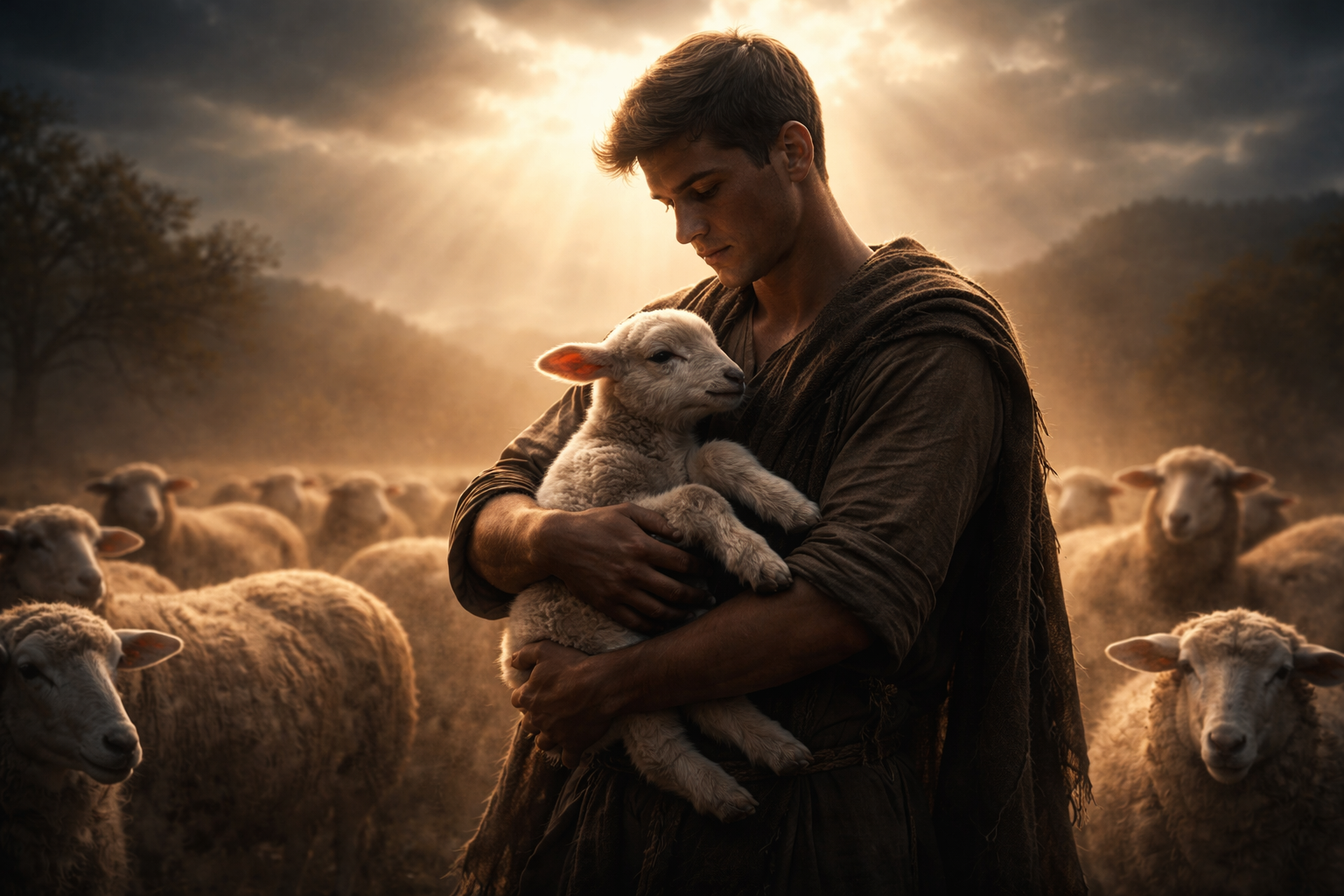
Abel’s life is narrated with striking economy in Genesis 4:1–10. He is the second son of Adam and Eve, the younger brother of Cain, and from the start he seems destined to live in the shadow of someone older, louder, and more agriculturally established. Cain works the ground; Abel keeps sheep. In biblical terms, Abel is a shepherd, which later turns out to be rather distinguished company, though at the time it simply means he spends his days with lambs instead of crops (Genesis 4:2, KJV).
What little Scripture says about Abel is telling. He brings an offering to the Lord from the “firstlings of his flock,” suggesting not merely participation in worship but discernment, devotion, and an instinct for giving what is best rather than what is merely available (Genesis 4:4, KJV). Cain also brings an offering, but the narrative is careful to note that God has respect for Abel and his offering, while Cain’s is not regarded in the same way (Genesis 4:3–5, KJV). The text does not overexplain, which is very biblical of it. It simply states the distinction and lets generations of theologians, preachers, and readers lose sleep over the details.
Abel’s life then takes a grim and sudden turn. Cain, enraged by divine rejection and apparently not gifted in emotional processing, rises up against his brother and kills him in the field (Genesis 4:8, KJV). Abel thus becomes the first shepherd mentioned in Scripture and, less enviably, the first murder victim. His recorded life is astonishingly short, and yet his death is treated as no small matter. God says that Abel’s blood cries out from the ground, giving his death a moral weight far beyond one family tragedy (Genesis 4:10, KJV). Abel speaks very little in the biblical record—indeed, he is given no spoken words at all—yet his blood, according to the narrative, has a voice.
There is something haunting about Abel’s life in Genesis. He appears, worships, dies, and is remembered. He does not build cities, father nations, or deliver speeches from mountaintops. He simply lives faithfully and is wronged violently. In literary terms, he is brief. In theological terms, he is unforgettable.
Theological Impact
Abel’s theological importance is vastly larger than the few verses that narrate his life. He is one of those biblical figures whose footprint is much larger than his biography, which is perhaps one of the Bible’s favorite ways of reminding readers that significance and length are not at all the same thing.
In the immediate context of Genesis, Abel becomes the first clear example of righteous suffering. He does what is acceptable before God and suffers not because he is wicked, but because someone else cannot bear the contrast. That is an important biblical pattern, and Abel is its earliest embodiment. The innocent sufferer, the righteous one envied by the unrighteous, the life cut short by another’s resentment—these themes begin with Abel and echo through the rest of Scripture.
The New Testament treats Abel with notable respect. In Hebrews 11:4, Abel is presented as a man of faith whose offering was more excellent than Cain’s, and who, though dead, still speaks. That line is especially fitting, because Abel has no recorded speeches in Genesis and yet somehow becomes one of the Bible’s more eloquent silent figures. His faith is considered exemplary not because he explains it well, but because he embodies it well. Scripture seems perfectly comfortable with the idea that a rightly offered sacrifice can say more than a thousand pious sentences.
Jesus also refers to Abel in Matthew 23:35 and Luke 11:51, where Abel stands at the beginning of the line of righteous blood shed on the earth. That is no small promotion. Abel is not merely a tragic brother from early Genesis; he becomes the prototype of the righteous slain by the wicked. He is, in effect, the opening note in a sorrowful biblical chorus of innocence wounded by envy, violence, and injustice.
There is also a powerful contrast in Hebrews 12:24, where the blood of Jesus is said to speak “better things” than that of Abel. Abel’s blood cries for justice; Christ’s blood proclaims redemption. Abel, then, becomes part of the theological architecture that helps frame the meaning of sacrifice, righteousness, justice, and grace. He is not merely a victim in a field; he is a figure through whom Scripture explores what it means for innocence to be violated and for heaven to hear.
Symbolism
Abel symbolizes righteousness without spectacle. He is not grand, flamboyant, or self-advertising. He does not appear to have the slightest interest in being impressive. He simply offers well, lives faithfully, and suffers for it. In an age that often mistakes visibility for value, Abel is a rather inconvenient reminder that some of the truest lives are the quietest.
He also symbolizes the fragility of human life. His very name points in that direction, and his story confirms it with brutal efficiency. Abel is a vapor indeed: here briefly, then gone. Yet the symbolism is not merely about life’s brevity; it is about life’s moral seriousness. Abel’s shortness of days does not make his life meaningless. On the contrary, the narrative treats his brief existence as weighty enough to summon divine judgment. Abel symbolizes the truth that a short life may still matter eternally.
His occupation as a shepherd adds another layer of symbolism. In biblical literature, shepherding often becomes associated with care, innocence, attentiveness, and later even kingship and divine guidance. Abel stands near the beginning of that imagery. He is a keeper of sheep, and that detail gives him a gentleness that sharply contrasts with Cain’s violence. The keeper of lambs becomes the first casualty of human hatred. There is a grim irony there, but also a powerful one.
Abel further symbolizes the righteous sufferer whose apparent defeat is not the final word. His blood cries out from the ground in Genesis 4:10, suggesting that injustice is never as buried as the murderer hopes. Abel becomes a symbol of moral witness. Even silenced innocence is not silent before God. That is perhaps one of the most enduring ideas in his story: righteousness may be crushed, but it is not erased.
Modern Significance
Abel remains surprisingly modern for someone whose principal biographical detail is being murdered in the Bronze Age’s most dysfunctional family. His story continues to resonate because sibling rivalry, wounded pride, religious comparison, and violence born from envy have not exactly gone out of fashion.
In moral and philosophical terms, Abel represents the perennial problem of innocent suffering. Why do the just suffer? Why are some people resented precisely because they are faithful, honest, or good? Abel stands at the beginning of those questions. His life does not answer them neatly, which may be why it still feels so honest. The Bible does not hand the reader a tidy explanation for Abel’s death. It simply insists that God sees it, hears it, and judges it. That combination of mystery and moral certainty still has force.
In literature and art, Abel often serves as a symbol of innocence destroyed by jealousy. He appears in paintings, poems, sermons, and dramatic retellings as the brother whose goodness provokes hostility. Modern readers may also see in Abel a broader symbol for all victims of unjust violence—the overlooked faithful, the voiceless harmed, the decent crushed by the angry. He is tragically timeless in that regard.
Abel also matters in modern spiritual reflection because he represents the idea that sincerity in worship is not trivial. In a world fond of performance, Abel suggests that what is offered to God matters, and how it is offered matters too. He reminds readers that devotion is not measured by noise, but by substance. He is, if one may put it this way, the patron saint of those who do the right thing quietly and then discover that quiet righteousness is oddly provocative to everyone determined not to practice it.
There is even a modern psychological angle to Abel’s story. He stands as the person against whom another measures himself, then hates the comparison. Cain cannot endure Abel’s acceptance because it exposes his own state. Abel, then, symbolizes the uncomfortable mirror that goodness can become. Sometimes the righteous do not need to accuse at all; their existence is enough to irritate a guilty conscience.
Best Remembered as
Abel is best remembered as the righteous brother whose faithful offering was accepted by God and whose innocent blood cried out from the ground. He is the Bible’s first martyr-like figure, the earliest example of a just man suffering at the hands of the unjust (Genesis 4:4–10; Hebrews 11:4; Matthew 23:35, KJV).
Yet to remember Abel merely as Cain’s victim would be too small a summary. He is remembered as the man whose faith outlived his lifespan, whose silence became testimony, and whose death became one of Scripture’s earliest declarations that heaven is not indifferent to injustice. He enters the story briefly, exits violently, and remains memorable because he embodies a truth the Bible never tires of repeating: righteousness may be vulnerable, but it is never invisible.
In the end, Abel is remembered as the man who did not live long, did not speak much, and still managed to say something to every generation. That is not a bad legacy for someone whose name means vapor. It turns out even a breath can echo.
About the Author